If your dog or cat shares your bed, or just naps on it during the day, pet hair ends up woven into your sheets, duvet cover and throws. Putting them straight into the washing machine seems like the obvious fix. It usually isn’t. Wet hair clumps, sticks to everything else in the load and can end up in your machine’s filter.
The trick is to get most of the hair off while everything is still dry. Here’s a routine that works for sheets, duvet covers, blankets and pet beds.
Why washing alone doesn’t work
Pet hair grips fabric through friction and static. Water doesn’t loosen it; wet hair clumps instead. Consumer Reports warns that those wet clumps can stop water draining properly, which stresses the machine. Removing as much hair as possible before washing protects both your bedding and your washer.
Step 1: Strip the bed and shake everything outside
Take off the sheets, pillowcases, duvet cover and any throws. Fold each one inward so hair stays inside, then shake it out outdoors or over a balcony. A good shake removes a surprising amount of loose hair before you do anything else.
Step 2: Remove the clinging hair while it’s dry
Lay each item flat on the bare mattress or a clean floor, and work in sections:
- Rubber glove or rubber pet hair tool. Sweep across the fabric in one direction to pull hair into clumps, then pick them up.
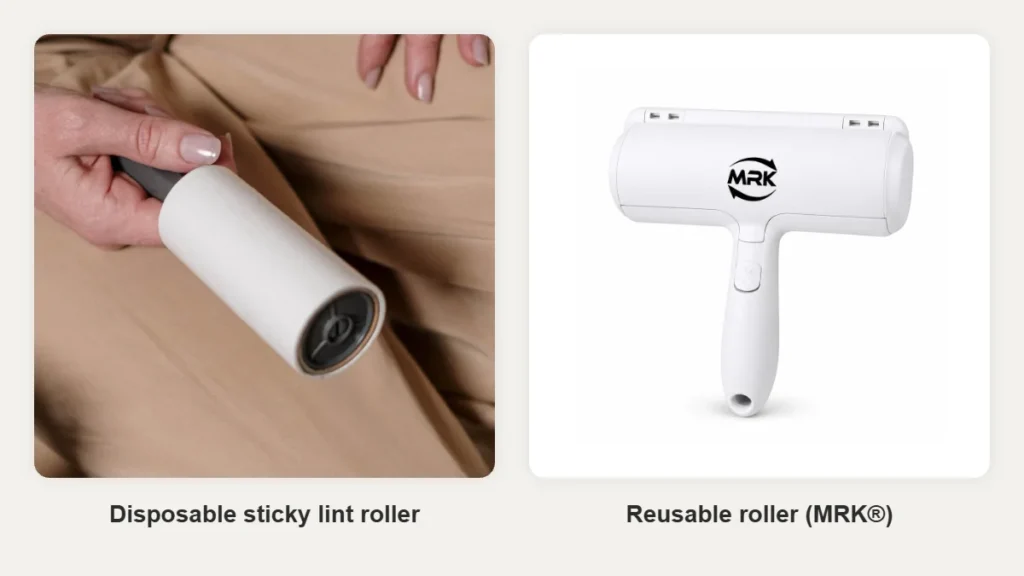
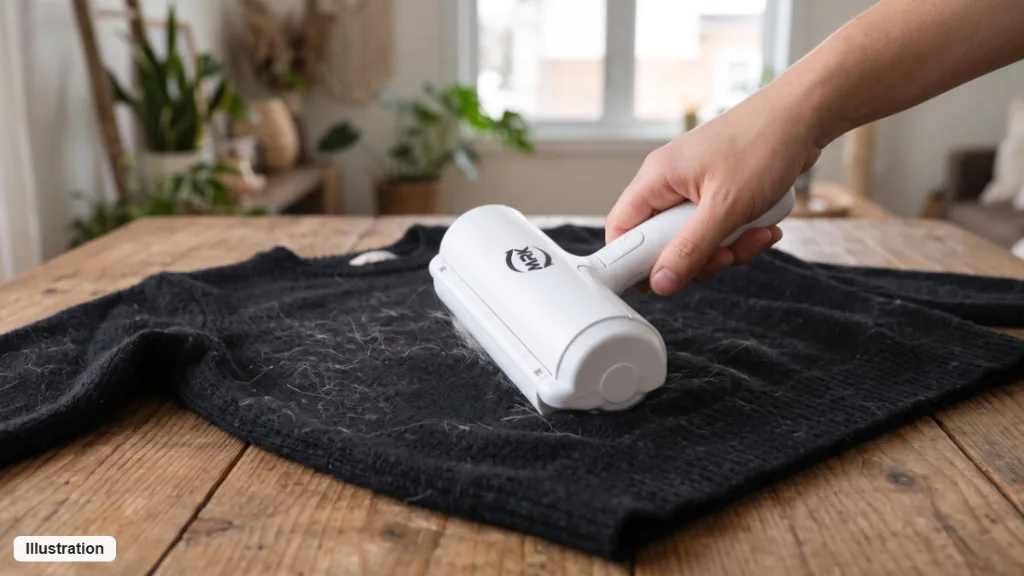
- Lint roller. Good for pillowcases, flat sheets and smaller blankets. Our comparison of reusable and disposable lint rollers explains which type suits larger jobs.
- Vacuum with an upholstery tool. Useful for heavy throws and the mattress itself.
Keep the fabric flat or taut as you go, because loose bedding bunches up and hides hair in the folds. Check the care label on anything delicate, such as silk pillowcases or knitted throws, before using rubber tools or sticky rollers on it.
Step 3: Tumble on no heat before washing
This is the step most people don’t know about. Put the bedding in the dryer on a no-heat or air-only setting for about 10 minutes. The tumbling loosens hair and the lint trap catches it. Consumer Reports recommends a 10-minute no-heat cycle before washing, and Maytag also recommends a no-heat tumble first.
Dryer balls or a dryer sheet can help reduce static cling. Bosch suggests both for pet hair. Clean the lint trap as soon as the cycle finishes; you’ll see how much hair it caught.
Step 4: Wash it the right way
- Follow the care label for water temperature and cycle, especially for duvets, comforters and anything with a filling.
- Wash pet blankets and pet beds separately from your own bedding, so hair from your pet’s bed doesn’t spread to yours.
- Don’t overload the drum. Bedding needs room to move for the water and detergent to rinse hair away.
- Large duvets and comforters may be too bulky for a home machine. If the label allows it, a large-capacity machine at a laundromat is often the better choice.
Step 5: Dry, then clean up after yourself
Dry as the care label directs, and empty the lint trap again afterwards. Then give your washer a quick check:
- Wipe out the drum and the door seal to remove any leftover hair.
- From time to time, clean the drain pump filter, following your machine’s manual. Bob Vila suggests letting the washer dry out, vacuuming the drum with a brush attachment, then clearing the filter.
- Run an empty rinse cycle if you’ve just washed something very hairy, such as a pet bed.
Washing clothes with pet hair on them? Our guide to removing pet hair from clothes uses the same dry-first routine for sweaters, trousers and coats.
Keeping hair off the bed in the first place
- Use a washable throw on your pet’s favourite spot. One throw is much quicker to clear than a full duvet.
- Brush your pet regularly, especially in shedding season, ideally outside or on an easy-to-clean floor.
- Do quick top-ups between washes. A fast pass over the duvet every couple of days stops hair working its way into the fibres.
- Keep pet bedding near your pet’s bed. Pets often carry hair from their own bed onto yours.
The same approach works on sofa throws and cushion covers. See our fabric-by-fabric guide to pet hair on couches.
Where a reusable roller fits
Any roller or rubber tool that suits your fabric works for step 2. Reusable rollers make the most sense for frequent, larger jobs such as duvets, blankets and pet beds. Check the roller maker’s instructions on where it’s meant to be used, and test on a hidden spot first.
MRK makes a reusable pet hair roller. The product page lists where it’s intended to be used, and How It Works shows how to use and empty it.
The bottom line
Get hair off bedding while it’s dry: shake it out, use a rubber tool or roller, then tumble it on no heat for about 10 minutes. Only then wash it, following the care label, and wash pet blankets separately. Clean the lint trap and the washer afterwards, and use a throw on your pet’s favourite spot to make next time easier.