Pet hair doesn’t behave the same way on every couch. On a smooth microfibre sofa it sits on the surface and wipes away. On linen or bouclé it works into the weave, and on velvet it lies along the pile. Using the wrong method on the wrong fabric can leave hair behind, or worse, roughen the upholstery.
This guide covers dog and cat hair, starting with the step most people skip: finding out what your couch can actually handle.
Start with the cleaning code
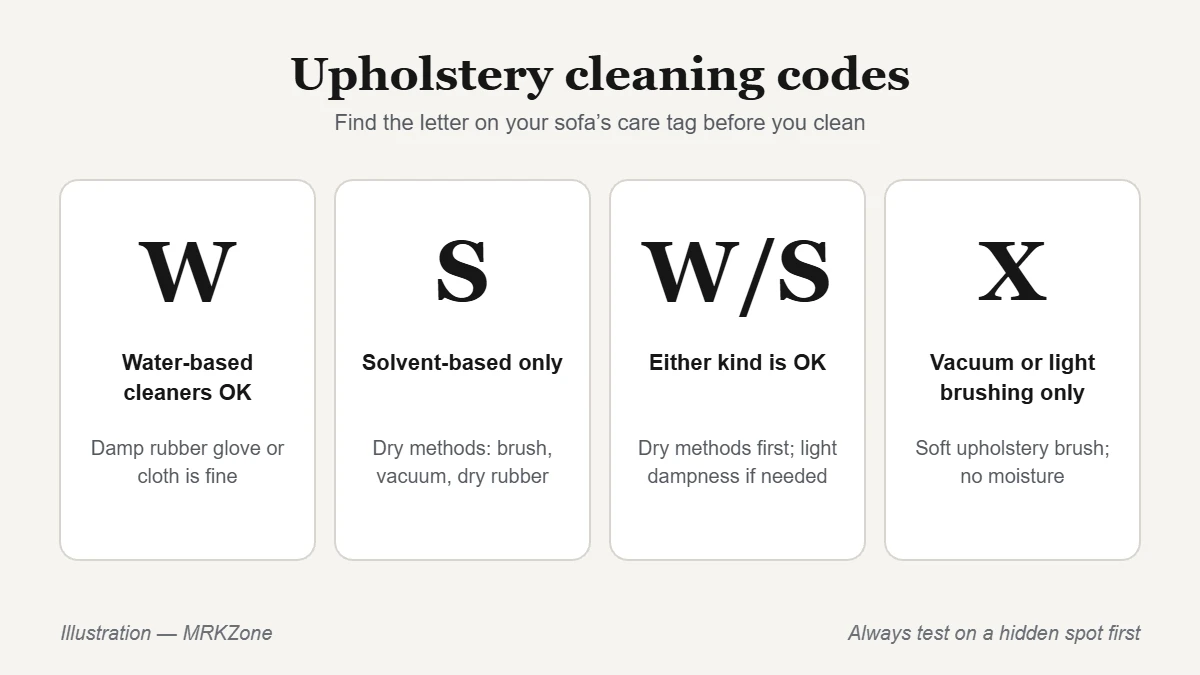
Most upholstered furniture has a care tag, often under a cushion or on the underside of the frame. Look for one of these letters:
| Code | What it means | What it means for pet hair |
|---|---|---|
| W | Water-based cleaners are safe | A slightly damp rubber glove or cloth is fine |
| S | Solvent-based (dry-cleaning) products only | Stick to dry methods: brush, vacuum or dry rubber |
| W/S or S/W | Either kind of cleaner is acceptable | Dry methods first; light dampness if needed |
| X | Vacuum or light brushing only | Vacuum with a soft upholstery brush; no moisture |
These codes are a widely used standard for upholstery cleaning, as this guide from Rainbow Restoration explains. If the tag is missing, check the manufacturer’s website. Always test any method on a hidden spot first, such as the back of a cushion.
The method that works on most fabrics
Whatever your couch is made of, the same three-stage approach works well:
- Loosen. Pet hair clings through friction and static. A dry rubber glove, a rubber pet hair tool or a soft upholstery brush pulls it into clumps.
- Lift. Vacuum the loosened hair with an upholstery attachment, paying attention to seams and the gaps between cushions, where hair collects.
- Finish. Pick up the fine strands that remain with a lint roller or a reusable pet hair roller.
Working in one direction first and then crossing back over the same area helps. Hair often lies flat along the grain of the fabric, and a second pass from another angle loosens what the first one missed, as Fuller Brush points out.
Fabric by fabric
Microfibre and microsuede
Hair tends to sit near the surface of tightly woven synthetic microfibre, which makes it one of the easier fabrics. A dry rubber glove or a rubber squeegee drawn across the cushion gathers hair quickly. If your code is W, a barely damp cloth or glove works even better. Finish with a vacuum.
If you do any wet cleaning, finish your passes in the direction of the nap so the fibres dry evenly. BISSELL Canada recommends this to avoid a streaky or matted look.
Tightly woven fabrics (cotton, polyester, blends)
Most everyday sofas fall into this group. Hair embeds lightly, so the standard loosen, lift and finish routine works well. Rubber tools and rollers are both good choices here. Go gently on any fabric with a visible texture or loops so you don’t pull threads.
Velvet and chenille
Velvet’s soft pile holds hair, and it marks easily if you rub it the wrong way. Use a soft-bristled brush and work in the direction of the pile. Then vacuum with a soft upholstery brush. Castlery recommends brushing in the direction of the nap to lift hair and restore the finish.
Avoid heavy pressure, stiff bristles and anything that scrubs. Check the care label before using moisture.
Linen, bouclé and other loose or textured weaves
These are the hardest fabrics for pet hair, because strands work their way into the open weave and the looped surface. They’re also the easiest to snag. Check the care label before using moisture, sticky tape or strong suction, and use a soft upholstery brush or a vacuum attachment instead. Anker’s eufy guide gives the same advice for velvet, bouclé and loosely woven fabrics.
Take your time, work small sections and lift rather than drag. If the covers are removable and the label allows machine washing, that’s often the most thorough option.
Leather and faux leather
Hair doesn’t embed in leather, so this is the easiest surface of all. Wipe it with a clean, dry or lightly damp microfibre cloth, and vacuum the seams. The American Kennel Club also suggests a microfibre cloth or duster for leather furniture.
Skip rubber scrapers, rough brushes and anything abrasive, and follow the furniture maker’s care instructions for cleaning products.
Where a reusable roller fits
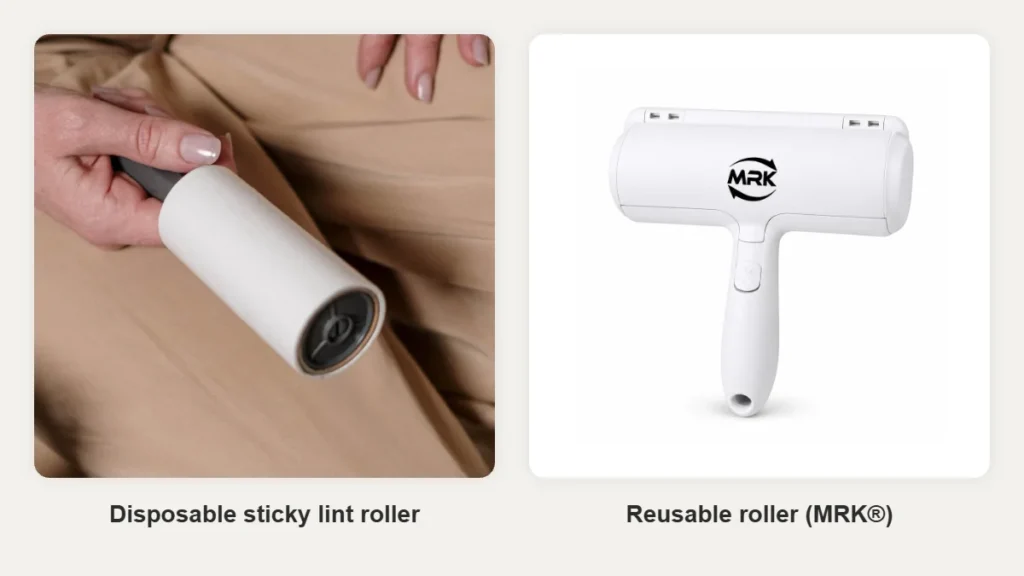
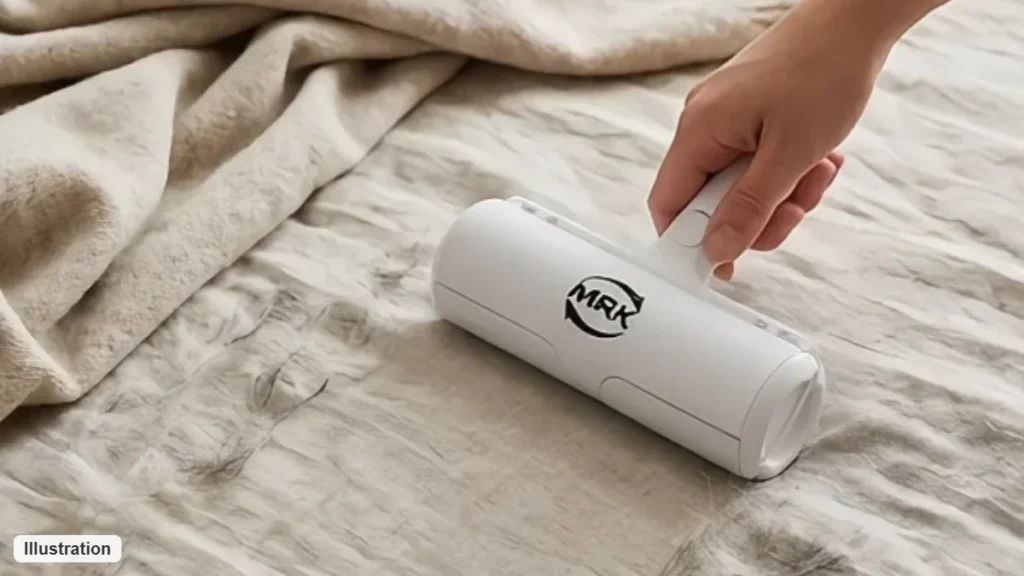
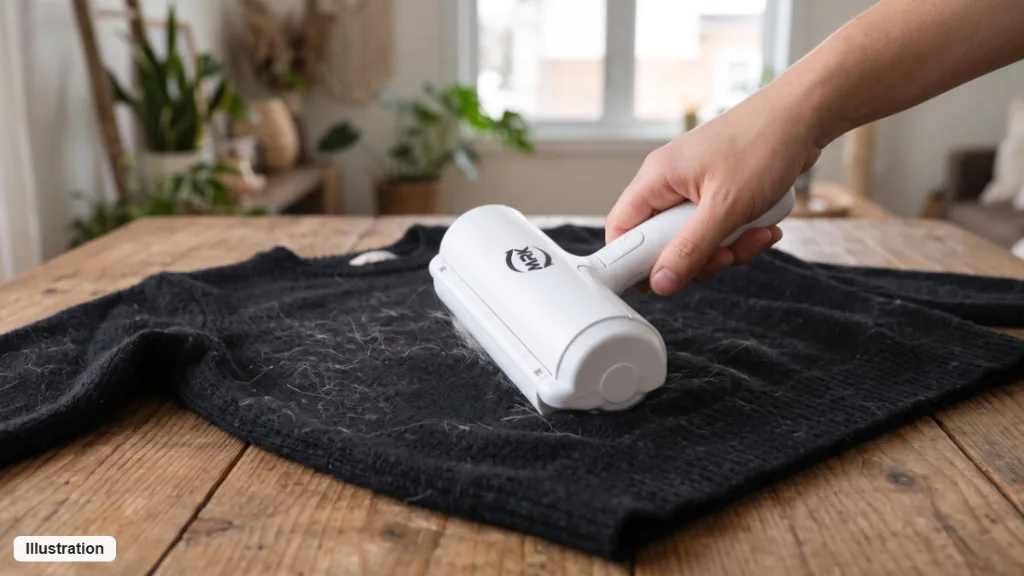
Reusable rollers are handy for the “finish” stage, and for quick daily passes between proper cleans. Before using any roller on upholstery, check two things: the roller maker’s instructions on where it’s meant to be used, and your couch’s care label. Then test on a hidden spot.
MRK makes a reusable pet hair roller. The product page lists where it’s intended to be used, and How It Works shows the technique. If you’re deciding between roller types, our reusable vs disposable lint roller comparison covers the trade-offs.
A note on dry Canadian winters
If pet hair seems to cling harder from late fall to early spring, you’re not imagining it. Dry indoor air from heating builds more static, and static holds hair to fabric. On fabrics coded W or W/S, a very light mist of water on the surface can make hair easier to lift. Family Handyman uses the same trick on car upholstery, noting that a little moisture neutralizes the static charge. Never soak the fabric, and skip this step on S- or X-coded upholstery.
Keeping the couch hair-free between cleans
- Cover your pet’s favourite spot with a washable throw. Shaking out one blanket is easier than clearing a whole cushion. Our guide to getting pet hair off bedding and blankets covers how to wash it without clogging your machine.
- Brush your pet regularly, outdoors or on an easy-to-clean floor, so less loose hair reaches the furniture.
- Do a quick pass every few days. A light build-up comes off in a minute; a week’s worth takes much longer.
- Vacuum under and between the cushions. Hair collects in the crevices and works its way back out.
The bottom line
Check your couch’s cleaning code, then match the method to the fabric. Use rubber or damp methods for microfibre and W-coded fabric, gentle brushing with the pile for velvet, a soft touch for linen and bouclé, and a microfibre cloth for leather. Loosen, lift and finish, and test anything new on a hidden spot first.