If you share your home with a dog or cat, you probably own at least one lint roller, and you probably buy refills more often than you’d like. Reusable rollers promise to end that, but they aren’t all the same, and disposable sticky rollers still do some jobs better.
Here’s the short answer. For regular pet hair on furniture, blankets and pet beds, a reusable roller usually makes more sense: you buy it once and it doesn’t create a pile of used sheets. For quick touch-ups on clothes or a roller in your bag, a disposable sticky roller is still hard to beat. Plenty of pet owners keep one of each.
The three kinds of lint roller you’ll find
“Lint roller” covers three quite different tools. Knowing which is which makes the comparison much easier.
Disposable sticky-sheet rollers
This is the classic: a handle with a roll of adhesive paper. You roll it over fabric until the top sheet is covered, peel it off and carry on with the next one. The handle lasts; the sheets are single-use, so you keep buying refills.
Washable sticky rollers
These use a tacky plastic or gel-like barrel instead of paper. When the surface is full, you rinse it under the tap, let it dry and the tackiness comes back. They cut out paper waste, but they have to dry before they work properly again. Bustle describes them as rinse-and-reuse rollers that otherwise work much like a traditional one.
Reusable rollers with a collection compartment
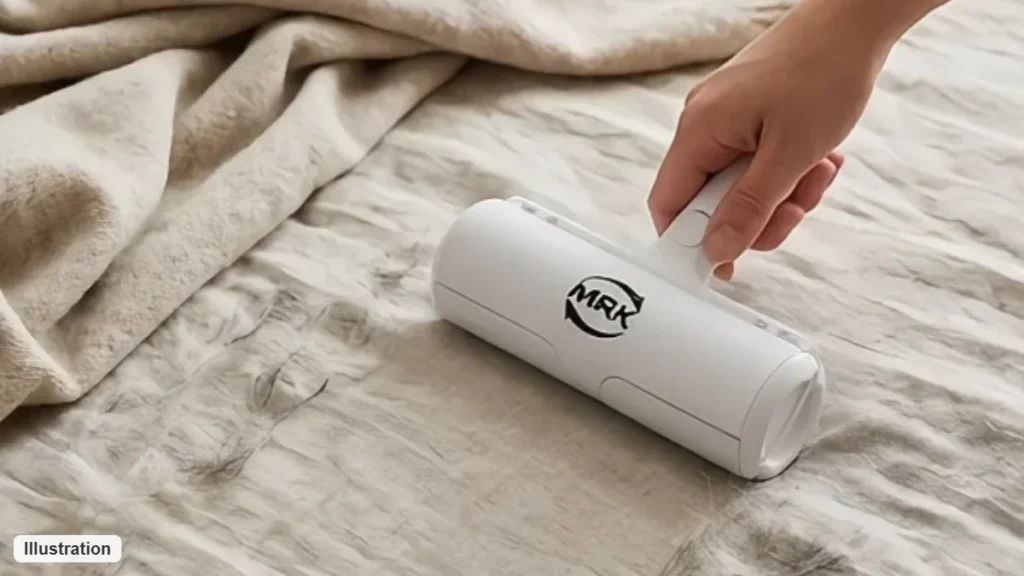
These don’t use adhesive at all. A fabric-covered roller sweeps hair into a chamber built into the body as you move it back and forth. When the chamber fills, you open it and empty the hair into the bin. There’s nothing to peel, rinse or replace in normal use. Bob Vila notes that this brush-and-compartment type is completely reusable.
You’ll also see rubber pet hair tools and grooming gloves. They work by friction, pulling hair into clumps you pick up by hand. They’re useful, but they’re a different category from rollers.
Side by side
| Disposable sticky sheets | Washable sticky roller | Compartment roller | |
|---|---|---|---|
| What you keep buying | Refill rolls | Nothing, in normal use | Nothing, in normal use |
| Waste | A used sheet every time one fills up | Hair rinsed off at the sink | Hair emptied into the bin |
| Ready to use again | Peel a sheet | Rinse, then wait for it to dry | Empty the chamber |
| Best for | Clothes, quick touch-ups, travel | Clothes and small areas | Larger fabric areas such as sofas, blankets and pet beds |
| Watch out for | Running out mid-job; residue on some fabrics | Picks up dust and grit along with hair; needs drying time | Follow the maker’s directions on how to move it and where to use it |
What a year of refills really costs you
It’s easy to underestimate how much you spend on refills, because each pack is cheap. Here’s a quick way to see your own number:
- Look at how often you actually buy a refill pack. Check your last few orders or receipts rather than guessing.
- Multiply the price of one pack by the number of packs you buy in a year.
- Compare that total with the one-time price of a reusable roller.
In a home with a heavy shedder, or more than one pet, the yearly refill figure is often the bigger number. In a home where you only roll off a jacket now and then, it may not be, and a disposable roller is perfectly sensible.
When a disposable roller is still the better tool
Reusable doesn’t automatically mean better. A sticky-sheet roller is still the right choice when:
- You’re heading out the door. A few passes over a coat or trousers is fast, and there’s nothing to empty.
- You need something small to carry. Travel-size sticky rollers fit in a bag or glovebox.
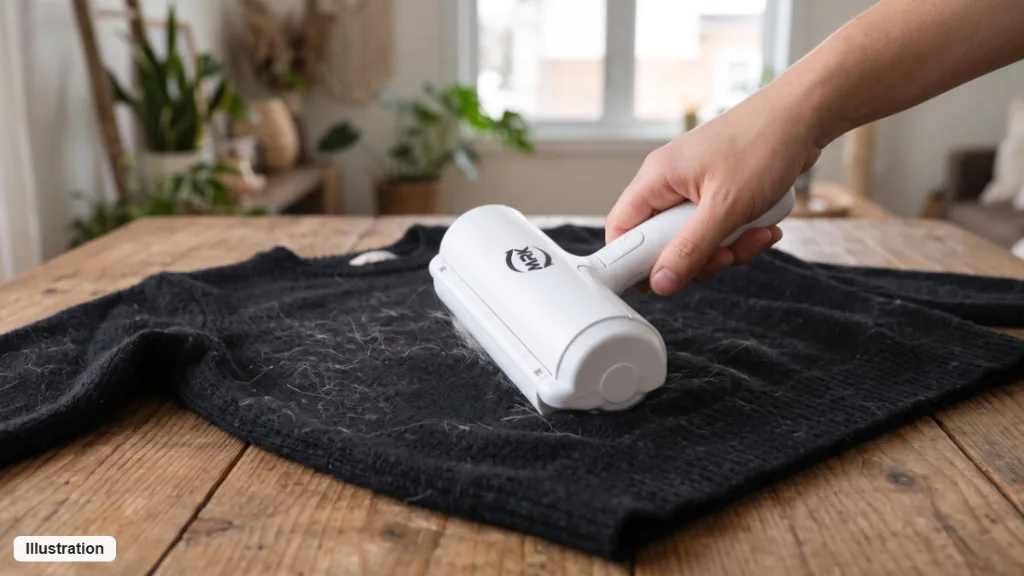
- The garment is fussy. For delicate clothing, check the care label first. A light pass with a fresh sheet is often gentler than repeated friction from a brush.
- You only see the odd stray hair. If pet hair isn’t a daily problem, a refill pack can last a long time.
When a reusable roller makes more sense
- Pet hair is a daily job. If you’re rolling the sofa or bed most days, refills add up quickly.
- The area is large. Couch cushions, throws, duvets and pet beds use up sticky sheets fast.
- You’d rather not keep restocking. No refills means no running out halfway through.
- You want less to throw away. With a compartment roller, the only thing that goes in the bin is the hair itself.
Getting better results from any lint roller
Whatever you use, a few habits make a real difference:
- Check the care label first. This matters especially on upholstery and delicate fabrics, and testing on a hidden spot costs nothing.
- Work in sections. Clear one cushion or one part of a blanket at a time instead of chasing hair across the whole surface.
- Keep the fabric still. Loose blankets and throws are easier to clear when they’re laid flat or held taut.
- Deal with heavy build-up first. A vacuum with an upholstery tool, or a rubber glove, removes clumps so the roller can handle the fine hair.
- Empty or refresh often. A full sheet or a packed chamber picks up far less.
For fabric-specific advice, see our guides to removing pet hair from a fabric couch, getting pet hair off bedding and blankets and removing pet hair from clothes.
Where MRK fits
A quick note: MRK makes and sells the product mentioned here.
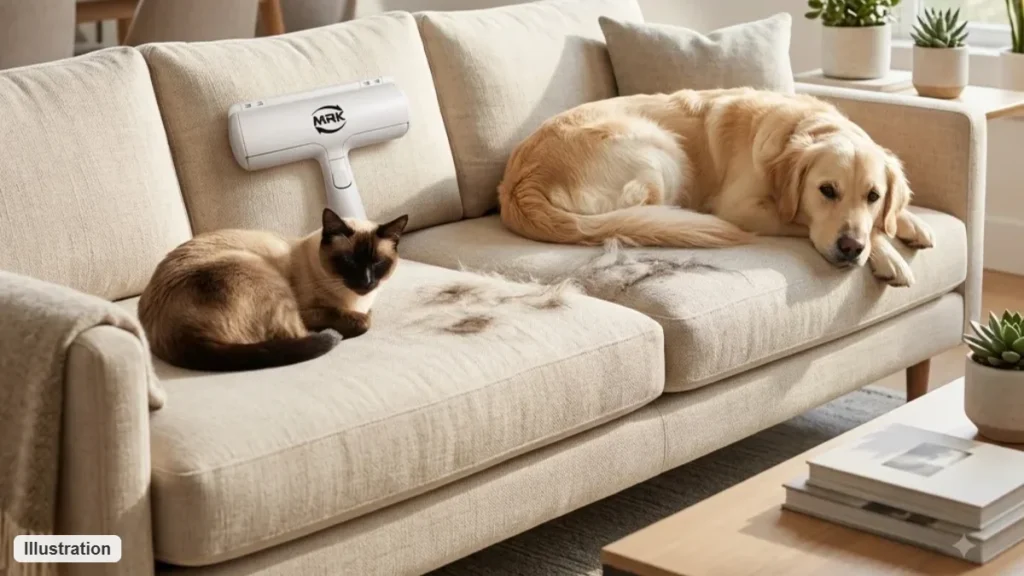
The MRK® Reusable Pet Hair Remover Roller is a compartment roller. It’s manual, needs no batteries and uses no sticky refills. You roll it back and forth over the fabric, and the hair gathers inside a built-in compartment. Then you open it, empty it and close it for next time. How It Works walks through each step, and the product page lists where it’s intended to be used.
The bottom line
If pet hair is a daily fact of life in your home, a reusable roller is usually the better buy: one purchase, no refills and less to throw out. Keep a small sticky roller for clothes and travel, and you’ll have both jobs covered.